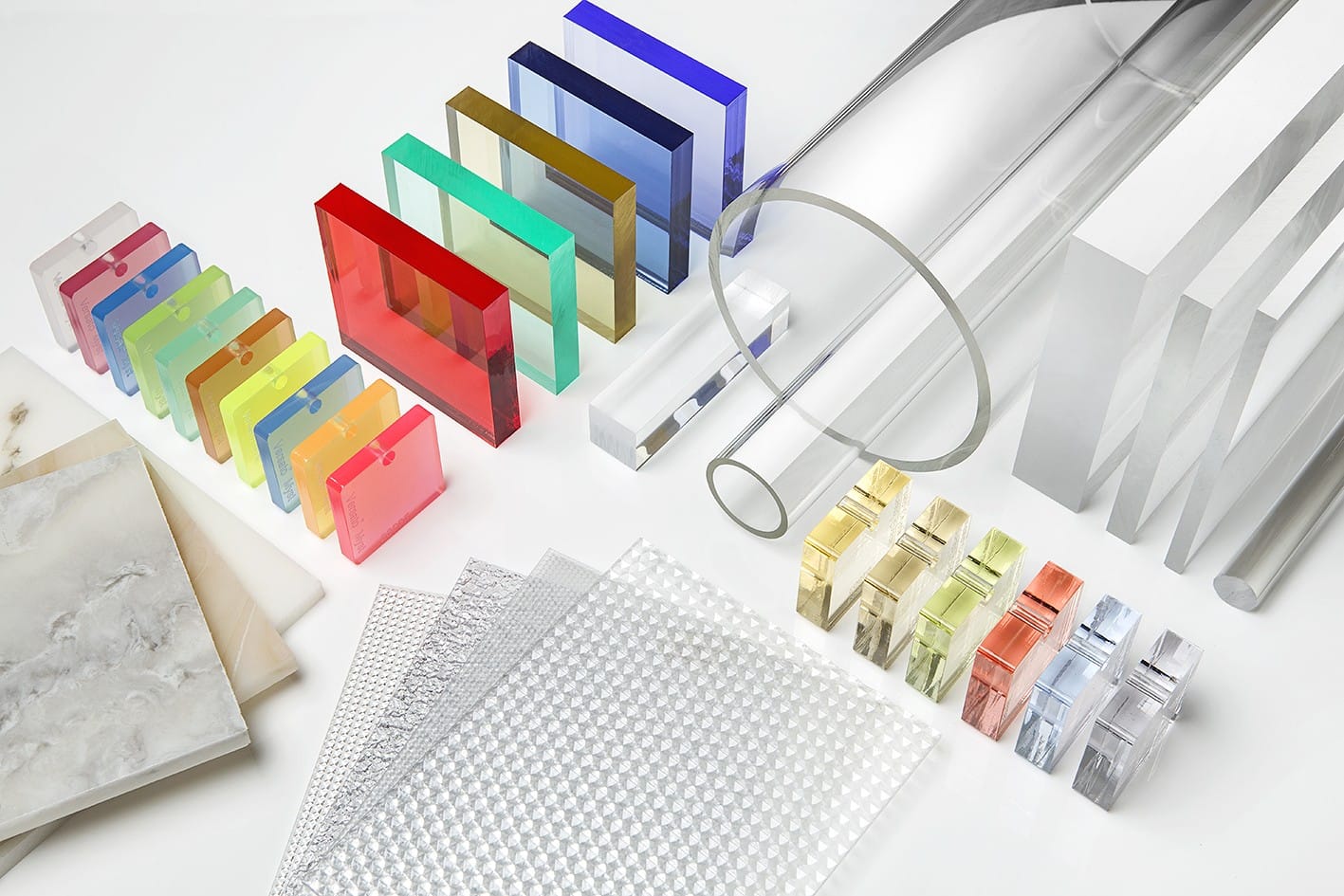
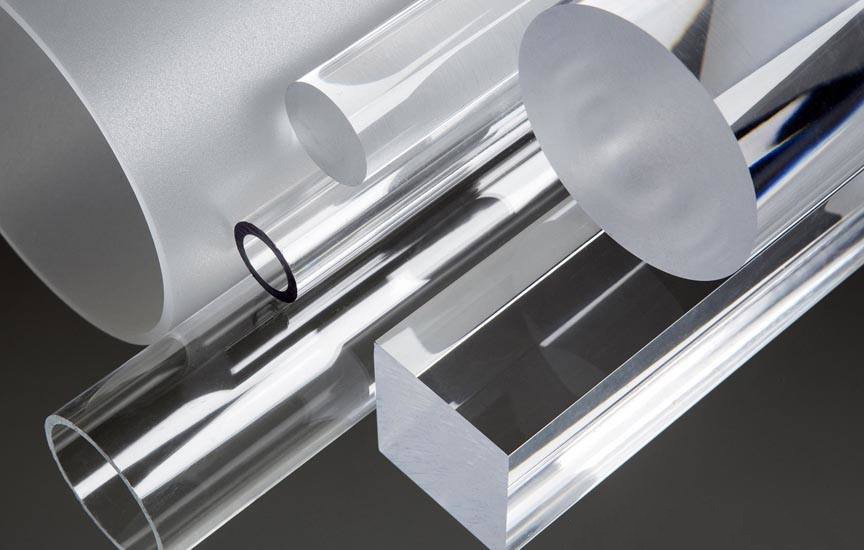
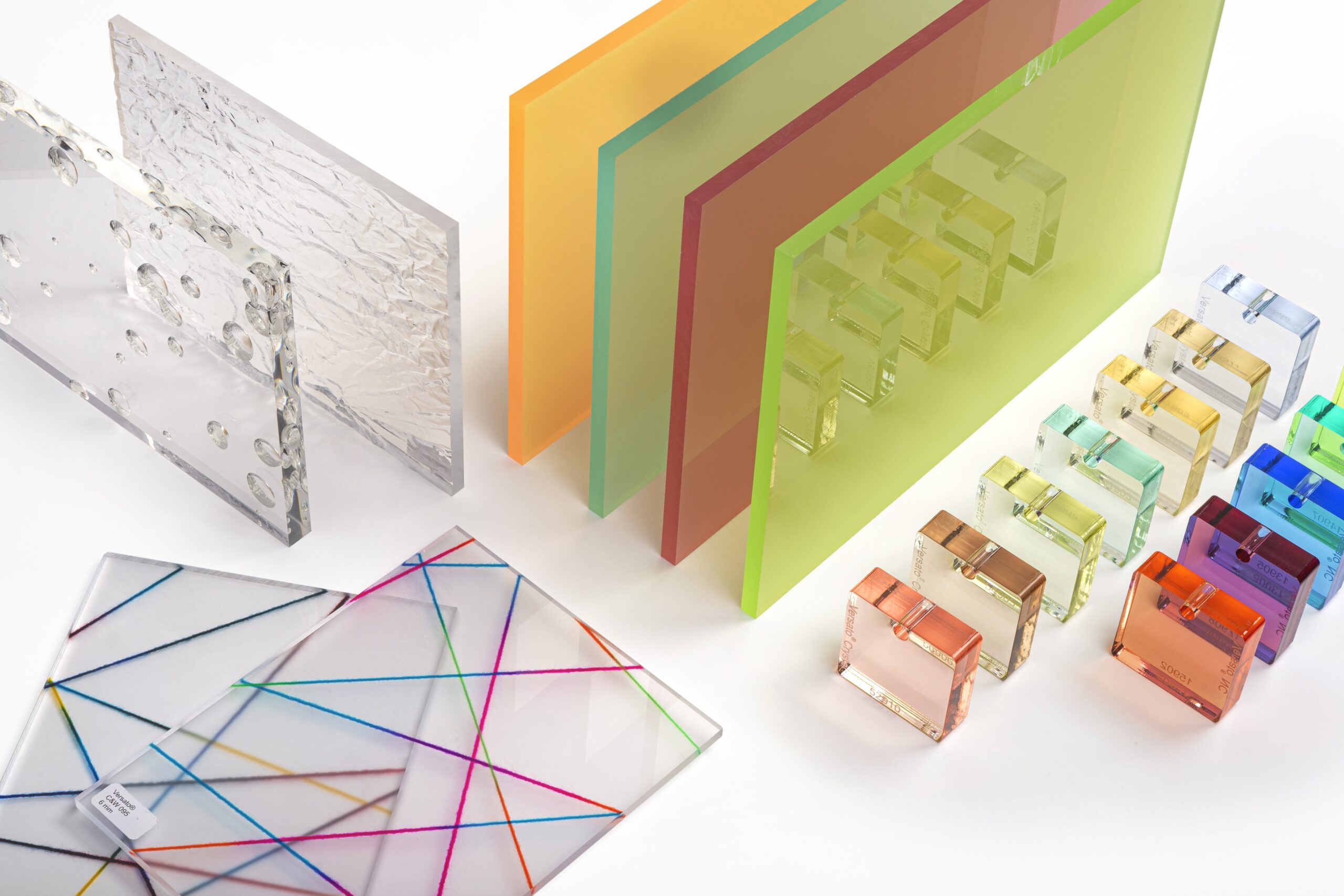
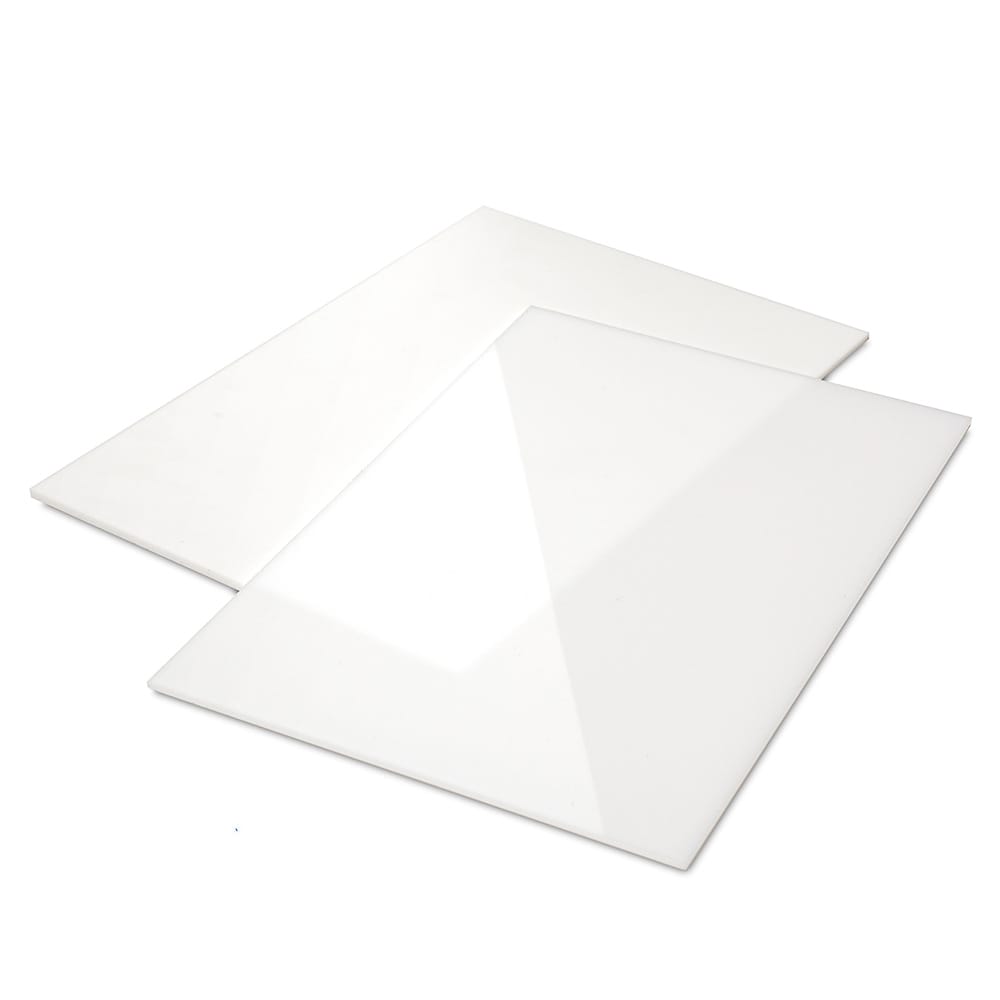
Besides acrylic (Plexiglas), Pyrasied also stocks other transparent plastics: polycarbonate and PETG. Both are clear, strong plastics widely used in technical and visual applications, where safety, durability and malleability are essential.
Read below when to choose polycarbonate or PETG.
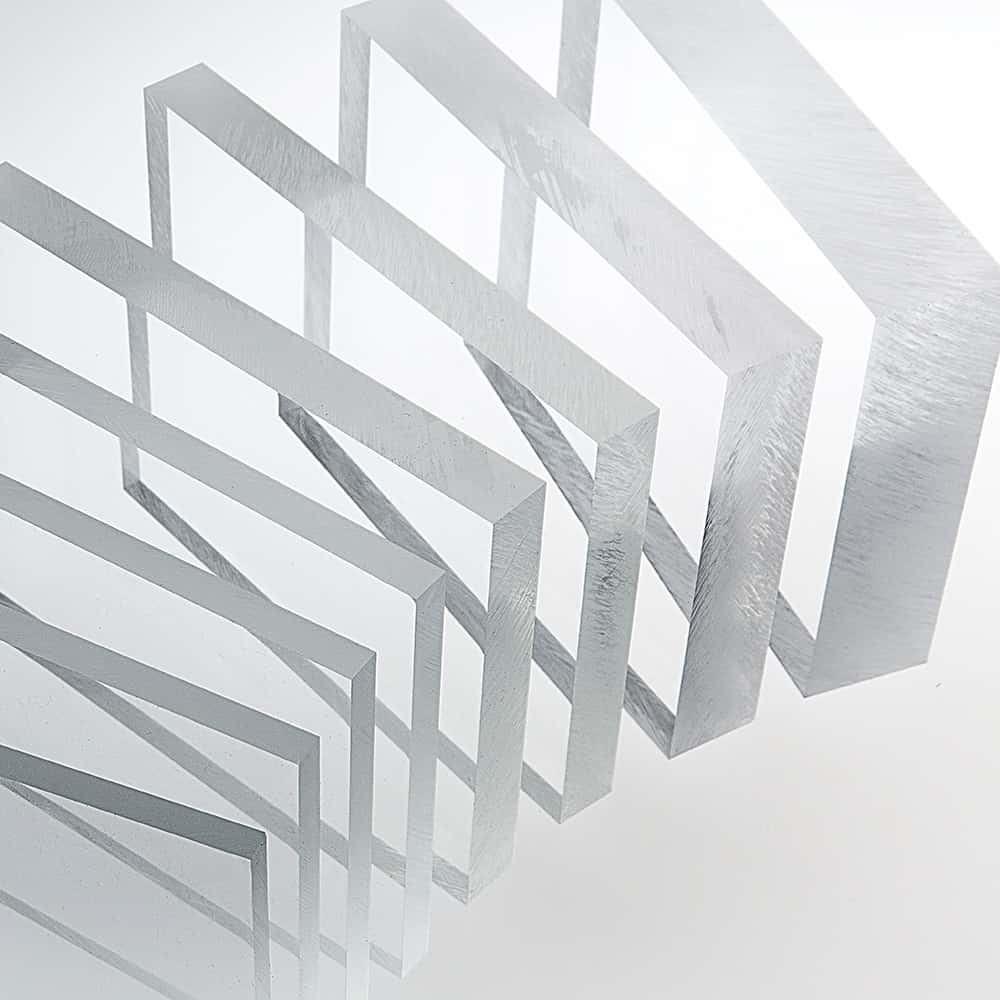
 Impact-resistant polycarbonate and food-grade PETGFire-resistant plastics with fire class bs1d0From construction and interiors to engineering and airports


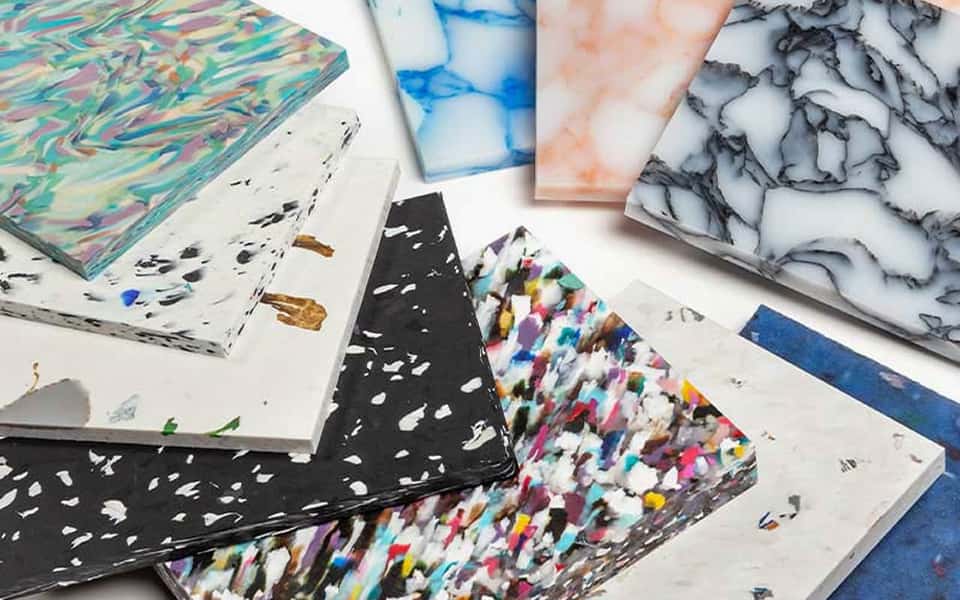
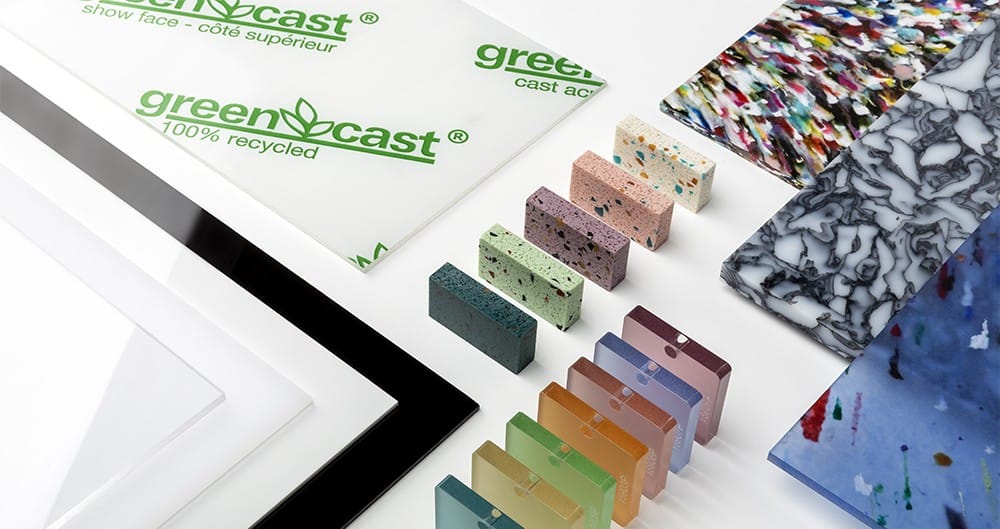
Show products made of 100% recycled plastic.
Show products made of 100% recycled plastic.
Main properties of polycarbonate
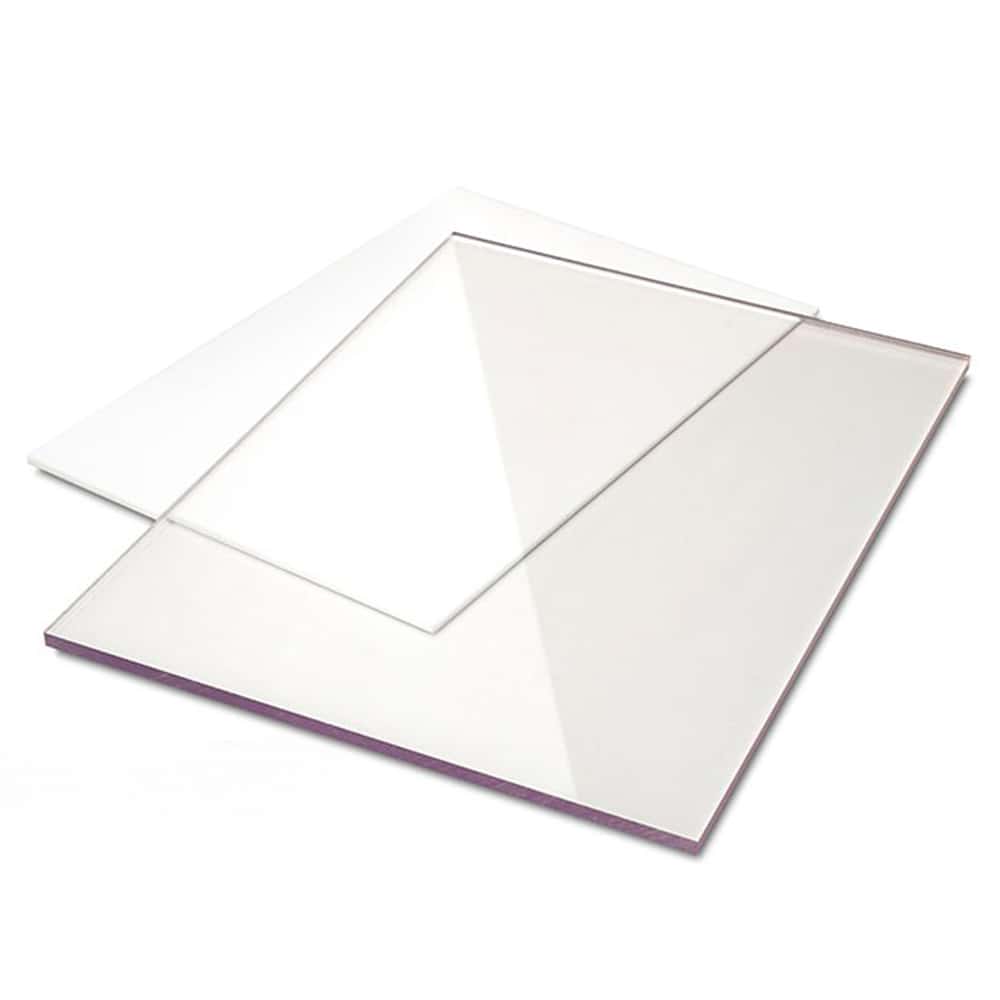
Polycarbonate is an impact-resistant, clear plastic for durable applications. It is up to 250 times stronger than glass of the same thickness. If safety, durability and transparency are important requirements, this is the right option! Think of applications such as safety glazing, protective covers, machine parts or burglar-resistant panels.
Fireproof and reliable
Due to its excellent fire rating, polycarbonate may be used in many public buildings and public areas. Thanks to its high temperature resistance, the material is also fire-retardant and self-extinguishing, providing additional safety.
Applications
Polycarbonate is a versatile plastic used in numerous industries, including:
Different versions
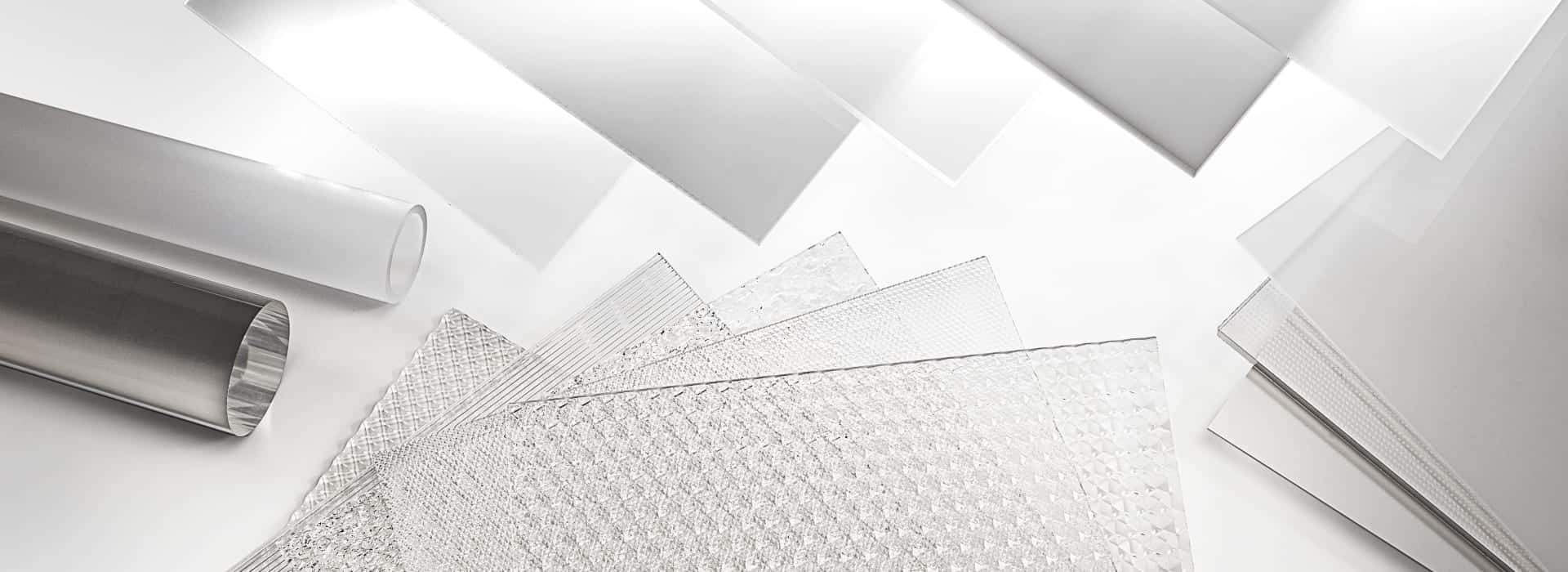
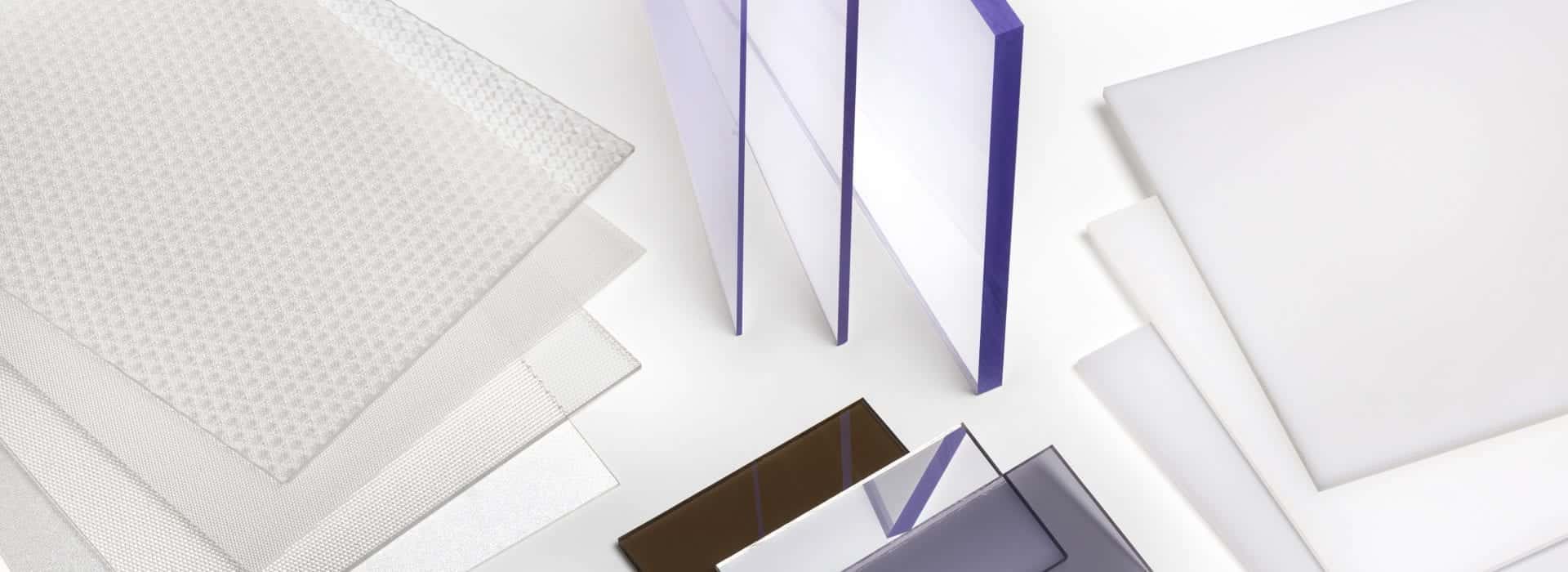
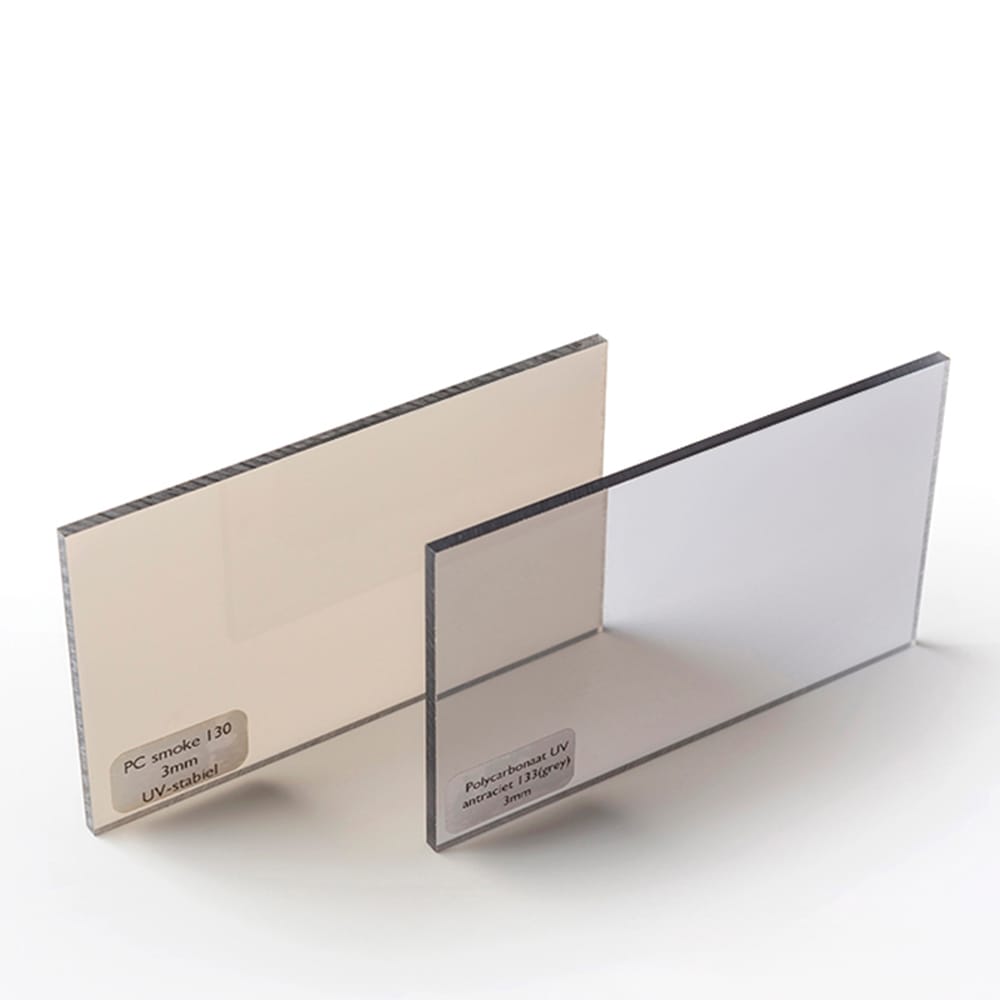
Polycarbonate is available in various colours and designs:
Brands
Here you will find polycarbonate of the highest quality:
Polycarbonate processing
Polycarbonate is easy to process: it can be sawn, milled, curved, glued, drilled, and polished. Thanks to minimal thickness tolerance, the sheets are precise and suitable for customised applications.
A suitable solution for every sector
Whether for safety glazing, illuminated advertising, mechanical engineering or architectural applications, polycarbonate offers the perfect balance: transparent, impact-resistant and fire-resistant.
PETG is a high-performance plastic distinguished by its exceptional impact resistance, clarity and versatility. This material combines the strength of polycarbonate with the processability of acrylic, making it ideal for a variety of indoor applications.
Food-grade and certified quality
PETG is European food-grade certified and allowed to come into direct contact with foodstuffs (SQF certification). Thanks to this property and its fire rating, PETG meets the requirements for use in public and public areas, such as airports, schools and shops. The material is also chemical-resistant, making it suitable for environments where hygiene and durability are important.
Strong, pliable and easy to process
PETG is a chemically resistant, impact-resistant and water-repellent plastic that is easy to process. The addition of glycol makes the material 15 to 20 times stronger than acrylic and keeps it easy to shape at higher temperatures. This makes PETG ideal for vacuum forming, bending or milling. Both round and angular shapes are easy to realise.
Applications
Thanks to its bright appearance and optical purity, PETG is ideal for the lighting and LED industry, displays, shields, protective plates and hygiene applications.
Note: PETG is not UV-resistant and may discolour with prolonged outdoor use. It is therefore especially suitable for indoor applications.
Variants and colours
PETG is available in clear or in various colour variations. The sheets are extruded, resulting in virtually no thickness tolerance.
A smart choice
Whether for interior projects, shop fitting or illuminated displays, PETG offers a reliable combination of safety, processability and durability. The material is also an excellent alternative to polycarbonate or acrylic if you are looking for an impact-resistant, certified and clear plastic.
Acrylic is crystal clear, 25 times stronger than glass and available in many colours, thicknesses and surface textures. Acrylic has the EN13501 fire classification. Acrylic is very easy to process: sawing, milling, laser cutting, hot and cold bending, gluing, drilling, polishing, sanding and printing.
Polycarbonate is highly impact-resistant and 250 times stronger than glass. This material is less clear compared to acrylic. Polycarbonate is available in clear and in some colours. This material has a better fire rating than acrylic: Bs1d0. Polycarbonate cannot always be lasered.
PETG is food-grade certified, chemical-resistant and is the only plastic allowed in public areas such as airports. In addition, PETG is impact-resistant and has the same fire certification as polycarbonate. PETG is not UV-resistant. PETG has no thickness tolerance and is available in clear and in some colour variations. PETG can also be vacuum formed. This material cannot always be lasered.
PETG is often used in the thermoform industry because of its excellent hot-bendability. It is also widely used for printing, making displays from it, as a diffuser plate for lighting.
PETG is one of the few plastics allowed to be used at airports.
PETG is food grade certified by itself and can therefore safely come into contact with food.
Clear boards, light diffuser (opal boards), boards in transparent colours and design boards with embedding or composite boards.
Acrylic is inherently 100% UV-resistant. You can easily use acrylic outdoors for 30 years without the material yellowing.
If the material also needs to be impact-resistant because it needs to be lumber-proof or weatherproof, polycarbonate is the most suitable material. In that case, make sure you choose a UV-proof polycarbonate sheet.

 EN
EN  NL
NL  DE
DE